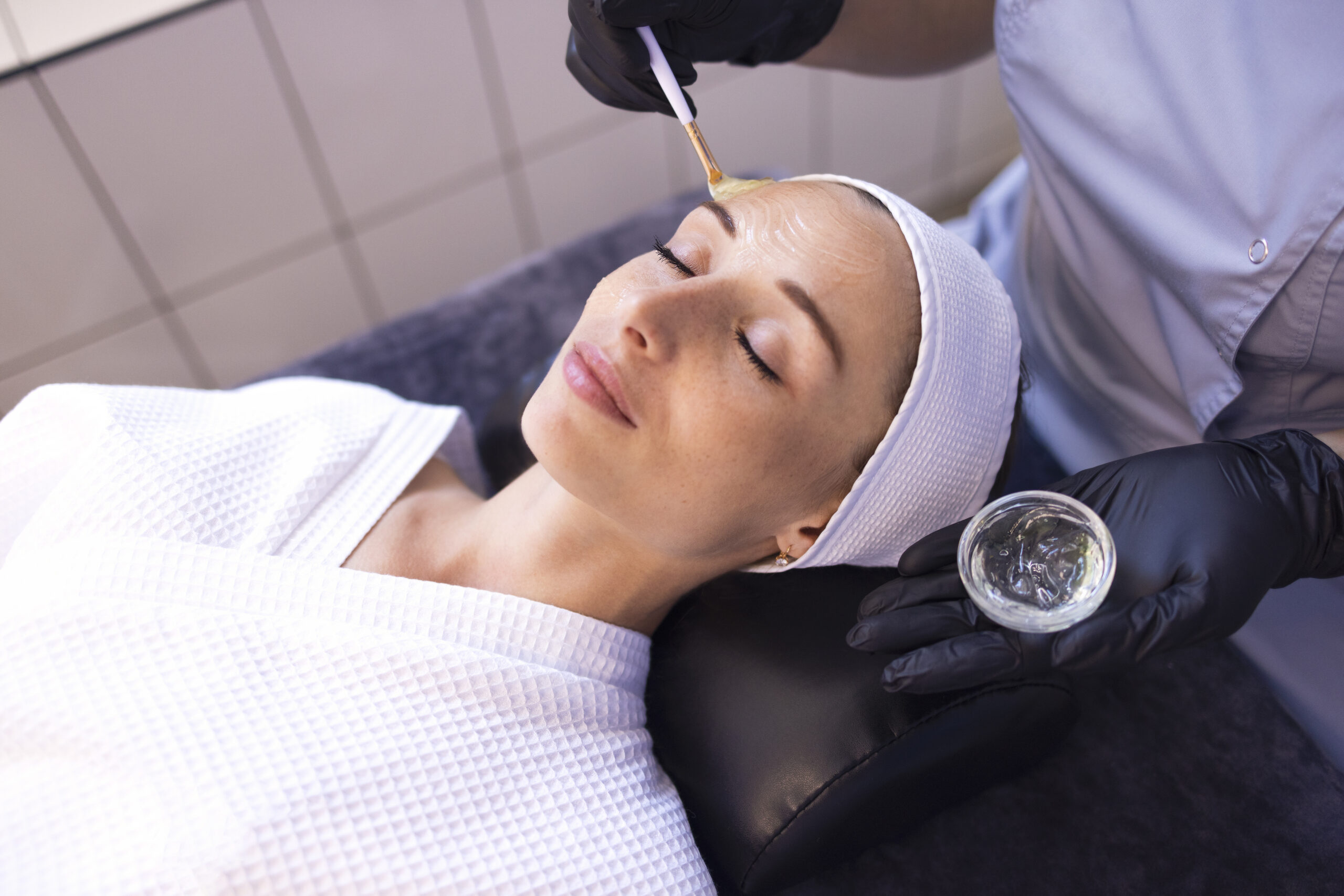
If you’ve ever dreamed of glowing, youthful skin, you’ve probably come across the term chemical peel. But what exactly is a chemical peel, and how does it work? This popular skincare treatment promises to rejuvenate your complexion by removing dead skin cells, reducing fine lines, and addressing issues like acne scars and hyperpigmentation. Whether you’re a skincare enthusiast or a newbie exploring treatment options, this guide will break down everything you need to know about chemical peels including how they work, the different types, and what to expect from the process.
What does a chemical peel do?

A chemical peel is a solution of various chemicals that are applied to the skin that lowers the skin’s pH. It works on the bonds between dead or damaged skin cells and healthy skin cells to try and push them to the surface of the skin. They also increase cell turnover, which results in healthier looking and feeling skin.
Types of chemical peels
Chemical peels vary in strength, chemical types and also benefits. They are broken down into 3 different groups which are superficial, medium and deep peels.

Superficial chemical peels
Superficial peels work on the surface of the skin and consist of mild acids such as alpha hydroxy acids (AHAs), salicylic acid and retinols. By only penetrating the outer layer of the skin (also known as the epidermis), it reduces the appearance of:
- Fine wrinkles
- Skin texture
- Minor discolouration
However, with superficial peels, the results are not permanent and need to be repeated up to 1–2 times a week to maintain results. It doesn’t require any anaesthesia and is a painless treatment. You may experience a slight burning sensation, but this should minimise fairly quickly.
Medium peels
Medium peels usually contain acids such as trichloroacetic and glycolic acid. A solution is applied to the skin and these reach the middle (dermis) and outer layers of the skin, working to remove any dead skin cells and stimulate the growth of new ones.
It is normal to feel a slight burning or stinging sensation when it is applied to the skin, but this should not feel painful. You can use a fan to help cool your skin down if needed.
Medium peels can be used to treat the following problems:
- Age spots
- Discolouration
- Scarring
- Fine lines
- Wrinkles
- Melasma
Deep peels
Deep peels are the strongest and most aggressive kind of chemical peels, as they penetrate much deeper into the middle layer of the skin in comparison to superficial and medium peels. The chemical solution consists of phenol acid or croton oil and many people choose deep peels due to its long-lasting results, even though it has a much longer recovery time and more risks. There is a recommended downtime of at least 2 weeks, and it can take several months for the skin to fully heal after receiving the treatment.
Deep peels should not be done at home and instead performed by an experienced plastic surgeon or dermatologist. It requires either a local anaesthetic or sedative, and numbing cream is also applied to the skin to minimise any pain. The chemical solution is left on for around 30 minutes or more and your heart and blood pressure is closely monitored as they can be impacted by the chemicals used. Even though there are more severe risks and a longer recovery time, many people choose a deep chemical peel due to its long-lasting results.
They can be used to treat issues such as the following:
- Acne scars
- Scars
- Discolouration/hyperpigmentation
- Fine lines
- Wrinkles
What are the risks?
A chemical peel treatment can come with various risks, these vary depending on the chemicals used and the type of peel.
The risks include:
- Darkening or lightening the skin
- Skin becomes more sensitive to the sun
- Scarring
- Redness
- Irritation
- Itchiness
The practitioner or healthcare professional performing the treatment should inform you on all the risks and advise about how you can reduce any risks of getting infections or complications after your treatment.
Shop Chemical Peels at Refine Pharma
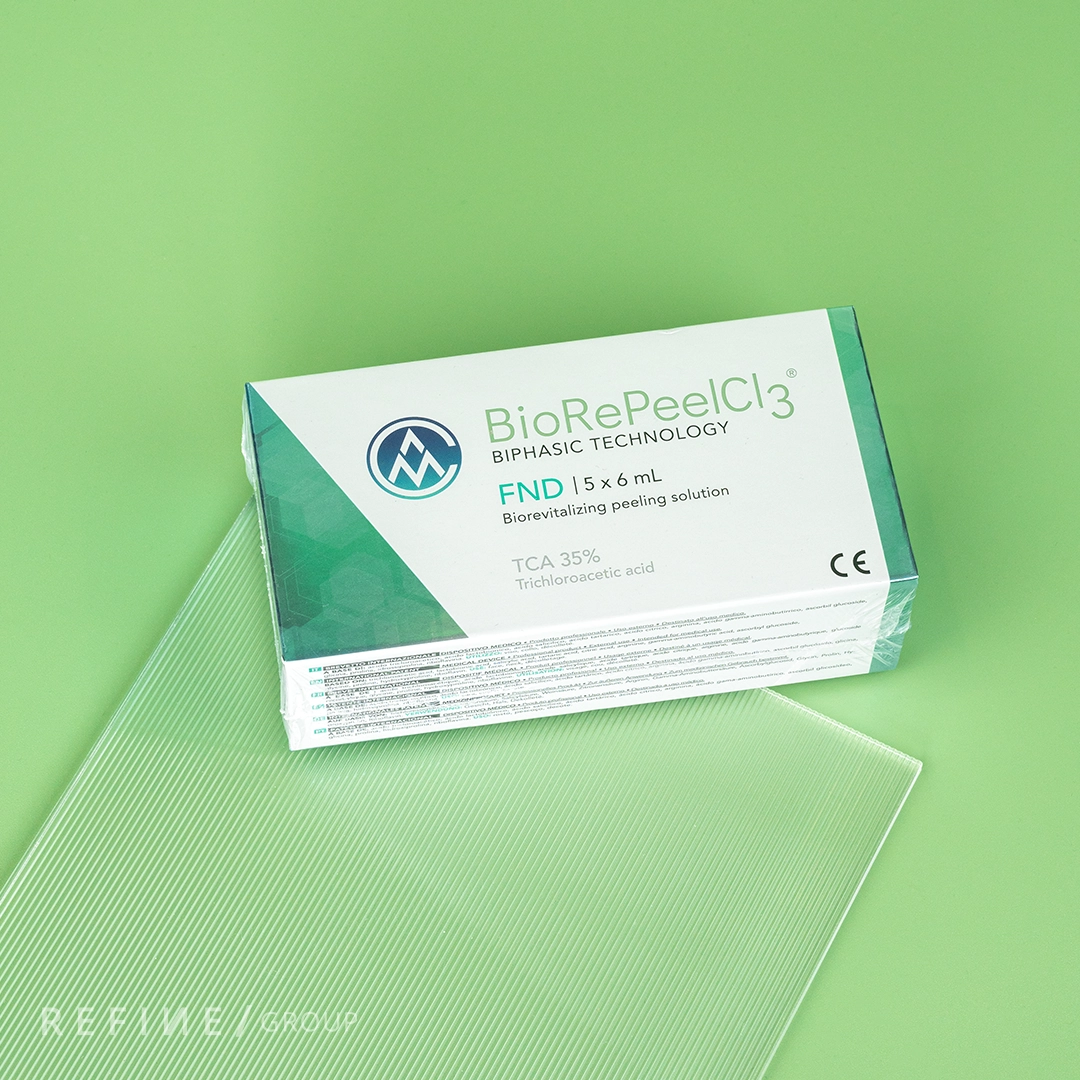
Here at Refine Pharma, we recommend our favourite chemical peel BioRePeel FND. It contains the key ingredient This advanced peel works by using a combination of Trichloroacetic Acid (35%) and other active ingredients like salicylic acid and amino acids. They gently exfoliate the skin to help kickstart collagen product without causing excessive peeling.
What are the benefits?
- Stimulates collagen and elastin production
- Exfoliates the skin to renew skin cells for improve texture
- Can be used in many areas including the face and neck
- Combats conditions like acne, skin impurities and enlarged pores